
Home » The vineyard
The vineyard
Soils
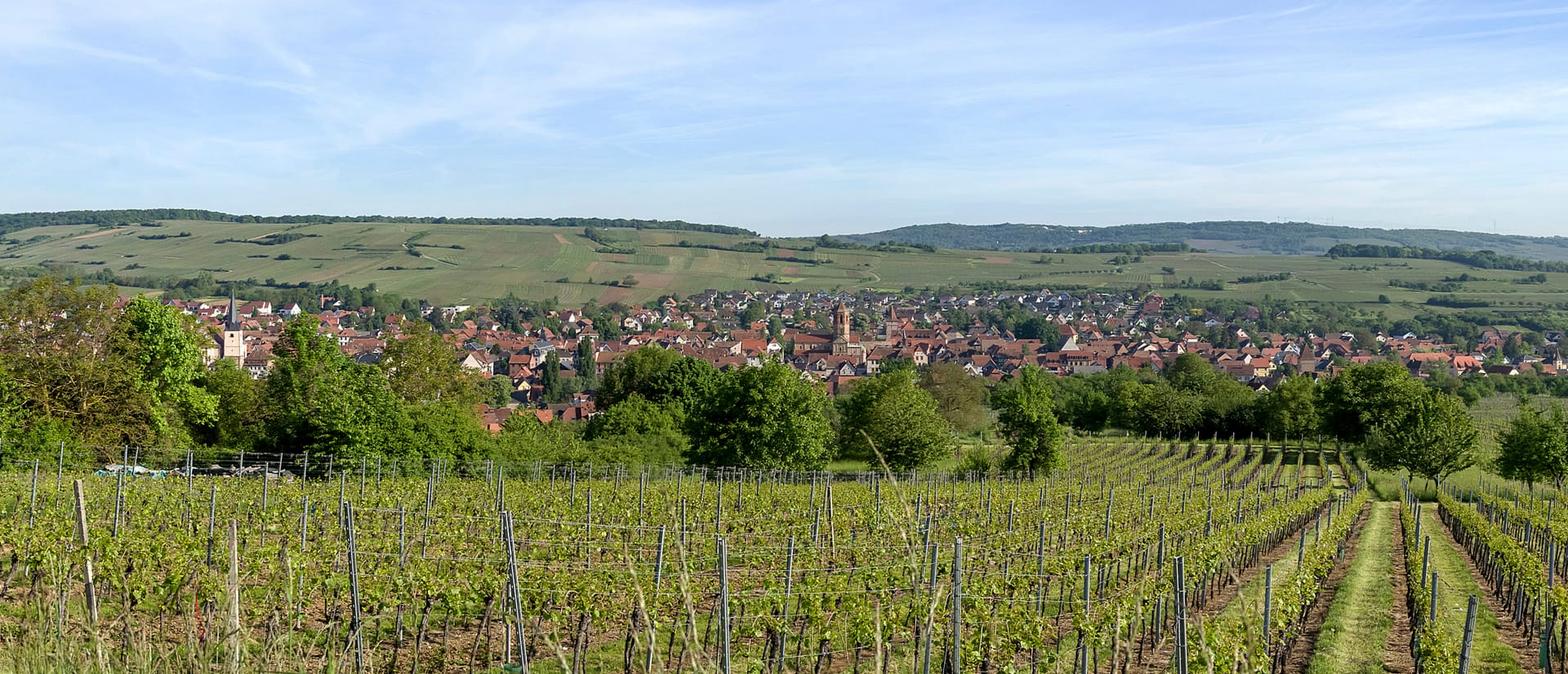
Hillsides of Rosheim are mainly made of clay and limestone, however, the soil has some particularities: in certain places, the soil is more stony, powerful and deep. We’re playing with those particularities to get a greater complexity for our wines.
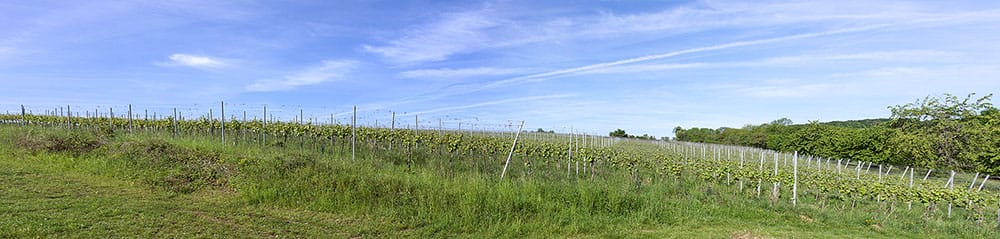
A good understanding of soils is really important to plant the right grape at the right place. Respecting soils is the best way to get the greatest wine. This essential knowledge has been acquired over centuries and is transmitted from generation to generation by winemakers, proud of the quality of their wine.
Cépages of the domain
At the beginning of the first millennium. Romans introduced viticulture in Alsace. It flourished until the 30-years war (1618 – 1648), which ruined the Land. The new rise of viticulture in Alsace starts after the end of the 1st World War, and will never stop increases it’s quality. Unlike any other French vineyards, which take their name from the terroir where they are created, Alsatian wines are named according to the cépage they are made of. They are all labelled “appellation d’origine controlée”.
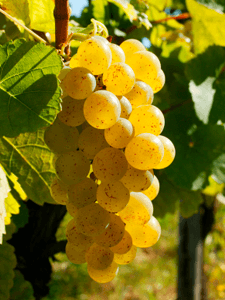
Sylvaner
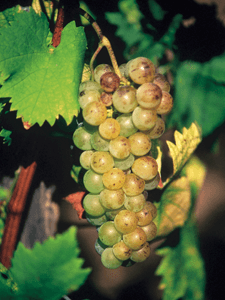
Muscat
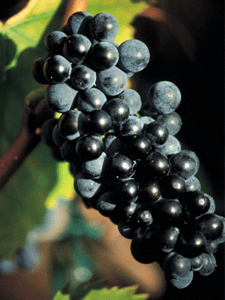
Pinot noir
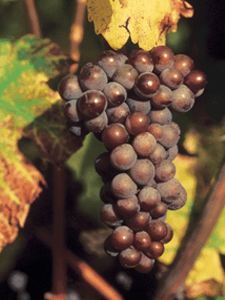
Pinot gris
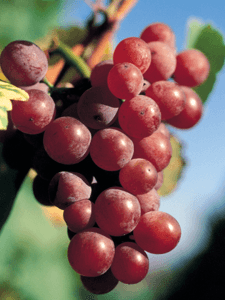
Gewurztraminer
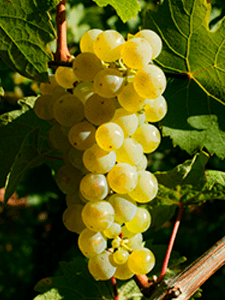
Riesling
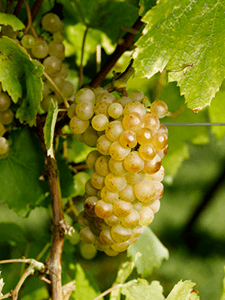
Auxerrois
Designations “Vendanges Tardives” and “Selection de Grains Nobles” are exclusive cepages of “Muscat d’Alsace”, “Riesling”, “Pinot Gris or “Gewurztraminer”. Those chef d’oeuvres are created when the year is really exceptional. Those wines become “Grand Crus” prestigious and rare, they develop an amazing complexity and strength.
The “Cuvées Vieillies en Füts de Chêne” rest for a minimum of twelve months in Bourgogne tanks (225 liters). Those tanks are made oak from Vosges Mountains. It allows the wines to become “wooded” elegant and complex.
The “Crémant d’Alsace” comes from the traditional method and is made with a “Pinot Noir” or a “Chardonnay”. It is served cold about 5 to 7°C. This sparkling wine offers a lot of freshness and is little bit fruity. With its light foam and its gilded dress, the “Cremant d’Alsace” is perfect for your receptions and cocktails.
Vine work
Vine requires a lot of attention and work during the whole year. A rigorous and regular study is the key to get the best grape.
Winter and spring works
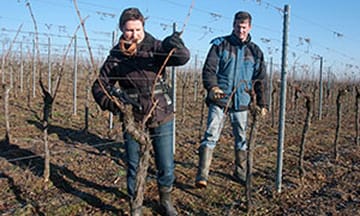
Wine cutting, preparation, “vine arching”
Spring and summer works
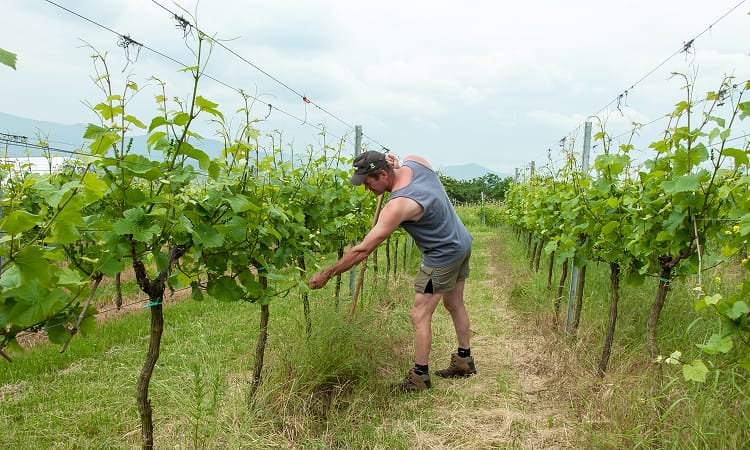
Destructuration of dead woods and leaf removal: those activites allow us to reduce a lot the treatment (even if they’re natural).
Ground work
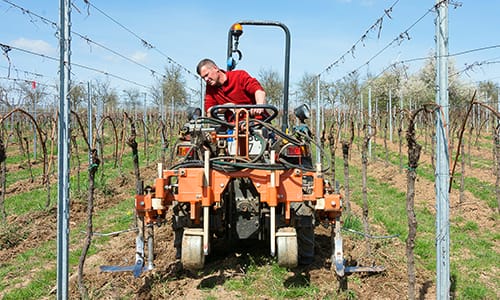
Intercep and the disc plow tools are used to ventilate the soil and skip the weeding activity. We cover soils with a special grass to structure it.
Of course, grape harvest is done manually.